Handmade POD vs print-on-demand: what's actually different, and which one fits your store
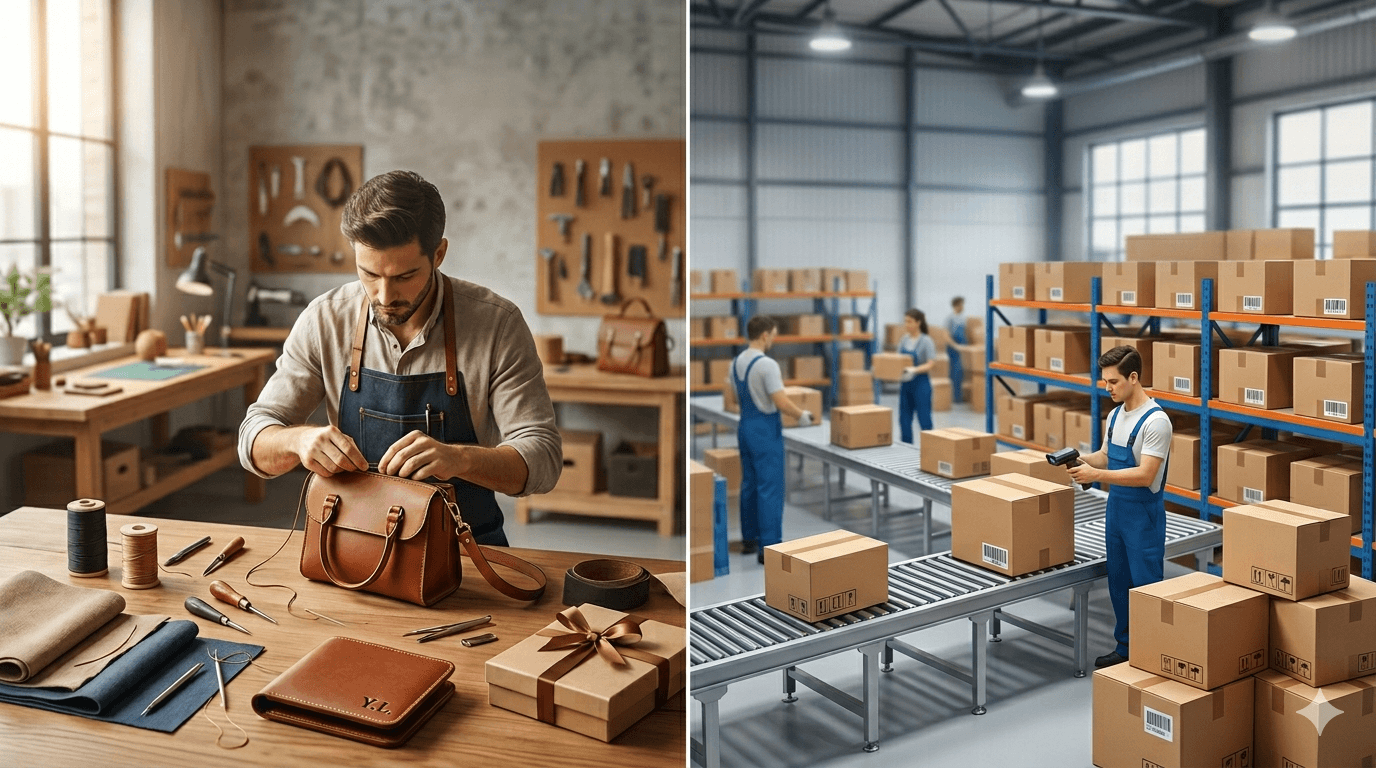
Sellers running independent stores or Etsy shops will eventually face this question: should you choose standard dropshipping, or handmade custom dropshipping?
Both models include “dropshipping” in their name, and on the surface, their workflows seem similar. But in reality, they serve two completely different types of customers—and their profit structures are also very different. Understanding this gap is more important than choosing a platform.
How standard POD works
Platforms like Printful, Printify, and Gelato follow a simple model. You upload a design, choose a product type (T-shirts, mugs, tote bags, phone cases, etc.), and the platform prints your design onto pre-made blank products, then ships them to customers.
The core advantages of this model are speed and standardization. Blank products are pre-stocked, printing is automated, and items shipped from US warehouses can arrive within 3–5 days. The barrier to entry is low, so even beginners can get started quickly.
The trade-off is limited profit margins. Take a popular Printful product like mugs—base cost is around $8–$12. Including shipping, you’ll need to price it at $20–$25 just to maintain a basic margin. This price range is highly competitive, and your ability to charge a premium depends largely on your design quality and marketing.
Another limitation is customization depth. Buyers can only personalize the printed design or text. The product’s material, shape, and production process remain fixed.
What is handmade custom POD
Handmade custom POD starts from a completely different point. Instead of blank products, each item is created from scratch by artisans based on the buyer’s specific requirements.
Take HandsDrop’s needle felt pet portraits as an example. Customers submit photos of their pets, and artisans recreate them as three-dimensional wool figures, capturing their expression and fur details as closely as possible. This isn’t printing an image onto a product—it’s crafting a physical object that resembles the subject in the photo.
The same applies to ceramic customization. From wheel throwing to glazing, painting, and firing, every step is done by hand. The final result depends on both the buyer’s input and the artisan’s interpretation—no two pieces are exactly the same.
This model has higher supply costs than standard POD, but also much higher retail prices. A needle felt pet portrait typically sells for $40–$80, with a supply cost of around $18–$30—leaving significantly more room for profit.
All products on HandsDrop are made by real artisans, supporting personalized customization with standardized fulfillment:
https://www.handsdrop.com/product
The core differences between the two models
First, the product itself. Standard POD sells designs applied to standardized items, while handmade custom POD sells uniqueness and craftsmanship. This leads to very different perceived value for buyers.
Second, customization depth. Standard POD customization is surface-level, while handmade customization can affect every part of the product—from material to shape to fine details. For buyers, the difference is between “I chose this design” and “this was made specifically for me.”
Third, production time. Standard POD is fast—typically 3–5 days. Handmade customization is slower, usually 7–16 business days depending on the product. This isn’t a platform efficiency issue—it’s determined by the craft itself. If buyers don’t understand this before purchasing, it can lead to disputes.
Finally, profit structure. Standard POD has tighter margins and relies on volume. Handmade custom products have higher per-order profit, but typically lower overall traffic. The operating rhythm is different.
Which model is right for you
It depends on the type of store you want to build and who your customers are.
If you have design skills and want to scale quickly without relying heavily on product uniqueness, standard POD is a reasonable starting point. It has low operating costs and allows you to quickly test different design directions with minimal risk.
If you want to sell emotionally driven products—where buyers are willing to pay more because “this was made just for me”—then handmade custom POD fits better. Categories like pet portraits, engraved jewelry, and anniversary gifts involve a completely different buying decision compared to a printed T-shirt.
These two models are not mutually exclusive. Some sellers run both standard POD and handmade custom products on Etsy, testing which performs better before deciding where to focus.
Managing expectations around delivery time
For handmade dropshipping, how you present your product page matters a lot. If production timelines aren’t clearly stated, or if you use vague phrases like “fast shipping,” the likelihood of negative reviews and disputes increases significantly.
Clear, specific descriptions are far more effective than vague promises. For example:
“Custom orders take 10–14 business days to produce, and 7–12 days for delivery after shipping”
provides much more clarity than
“We will ship as soon as possible.”
When buyers know what to expect, disputes drop significantly.
To understand the full HandsDrop workflow, see: How HandsDrop Makes Handmade Dropshipping Possible
If you’re a seller looking to list products on HandsDrop, see: How to Use HandsDrop: From Setup to First Sale