The Story Behind HandsDrop: Where Traditional Craft Meets Modern Customization
Our story: a piece of felt, a beginning
What Handsdrop does is straightforward to describe: we sell things made by craftspeople to the people who actually want them.
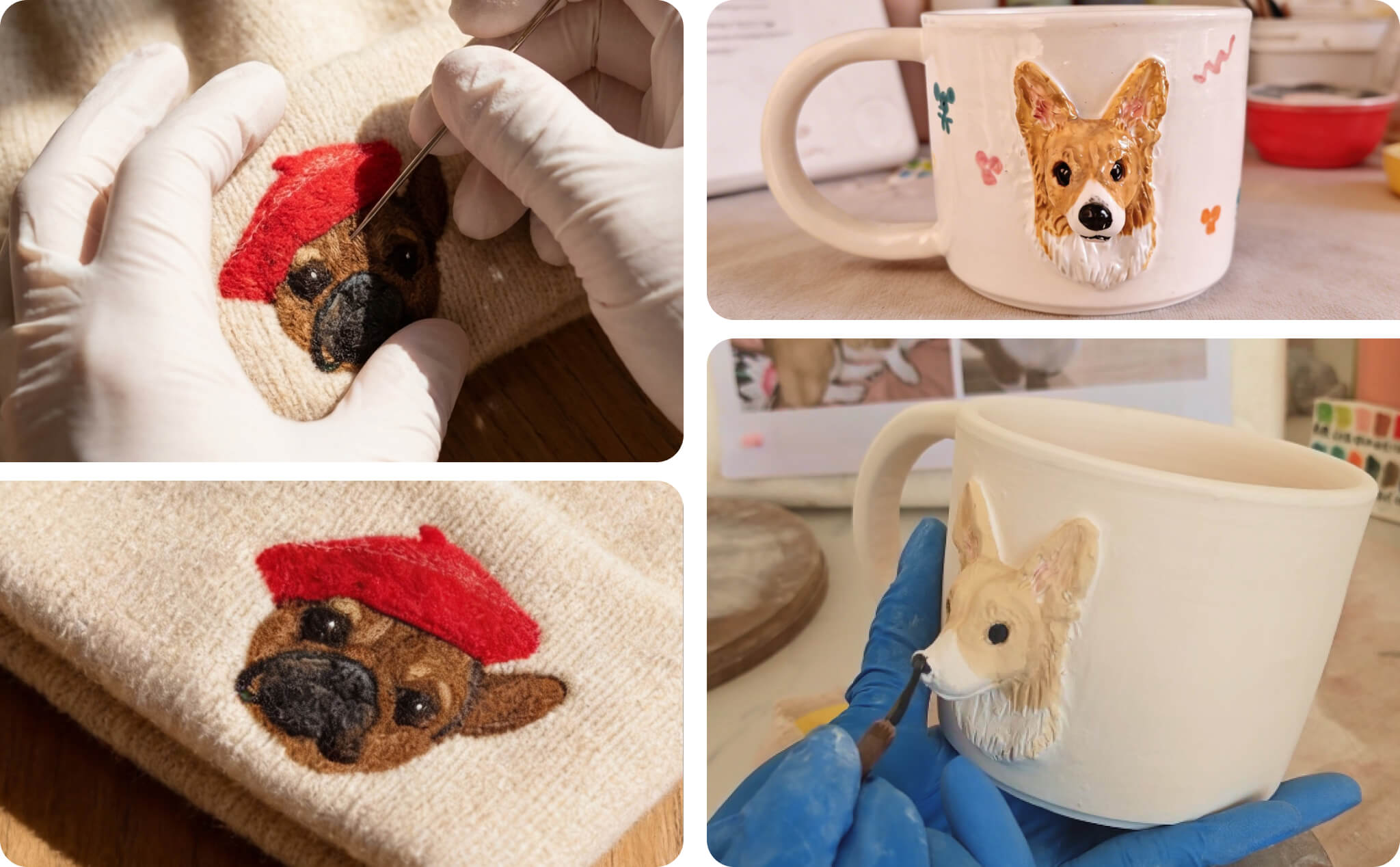
Doing it is another matter. Needle felt takes hundreds of pokes. Leather carving happens one cut at a time. Ceramics have to make it through the kiln. The finished piece carries time, patience, and the hours someone spent at a workbench paying attention. An assembly line can't produce that.
When we started, we thought there had to be people in the world willing to buy things like this. It turned out there are quite a lot of them.
Makers and buyers are further apart than they should be
Most people who make things by hand aren't great at selling online. And the people who actually want to buy custom handmade work often can't find a reliable way to do it. Either it's an individual seller where every question eats a week of back-and-forth, or it's mass-produced goods sold under a "handmade" label that doesn't really apply.
Handsdrop exists to bridge that gap.
We work with handcraft workshops around the world across needle felt, jewelry, ceramics, and leather carving. We also build the digital tools that let sellers run a proper business on Shopify, Etsy, and similar platforms, instead of taking orders through private chat.
Personalization, because you're thinking of someone specific
What we've noticed is that the people buying custom pieces almost always have someone specific in mind.
A ceramic mug with a child's name on it, for a friend who just became a mother. A leather keychain carved with two sets of initials, for an anniversary. A felt brooch made in a mother's favorite color, because nothing else felt right, but something special still needed to be given.
The "expensive" part of these objects isn't the material. It's the thought.
The customization features on Handsdrop let buyers take part in the design: they type the text, upload the photos, pick the colors, and see roughly what the finished piece will look like. It's not high technology. But that small bit of participation makes a difference, and buyers tend to care more about the piece when it arrives.
What we do for sellers
For Shopify sellers, installing the Handsdrop app means products can be imported to the store with one click, with customization options preset and ready to go. Orders are pushed to the factory automatically, tracking numbers sync back on their own, and supply chain work is largely hands-off.
For Etsy and other platform sellers, the current workflow is manual, with a few more steps per order. Supply and quality control, however, are still handled on our end.
Every item goes through quality inspection by the Handsdrop team before it ships. When something goes wrong, we take the after-sales load, so the seller isn't carrying it alone.
Why we do this
Custom handmade work is a difficult category to run. Every order is one of a kind. Even if the workshop has made a hundred similar pieces, the hundred-and-first still has to be made carefully from scratch. There are no shortcuts in that process.
But that's exactly why it's worth doing. The world of mass-produced goods is already crowded. Some things should be left to the people who want to make them with care.
That's the work Handsdrop is doing right now.